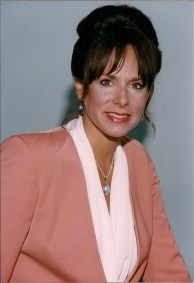
Adam Jaouad

Biography:

Adam was born in Saratoga Springs, New York. He graduated with honors from High School and Skidmore College in History and American Latin studies. He has worked as a Production Assistant for Lovett Productions,  Development Associate for SEEDS (a National program seeking educational equity and diversity), Marketing Assistant and Artists Liaison for SPAC and as a Foreign Marketing Liaison for a one of the largest Global company, English First provider of education worldwide. His interest lies primarily in International Growth for College Education. With a command of several languages, English, Spanish and French, he has traveled extensively and is well versed in understanding International challenges.

Adam has also lived some heroic times as a bone marrow donor for his sister Suleika Jaouad, now a leukemia survivor who holds an Emmy Award as a journalist and writer. The story was filmed in New York Time movie series: “Life Interrupted.”

Adam Jaouad is known to be caring, generous and honorable. A Team player on College Rowing Crew. His participation in the movie “Going Blind” a documentary on coping successfully with vision loss, attest to his diverse skills. As a son of a Swiss-born painter Anne Francey and a Skidmore College professor Hedi Jaouad in Comparative Literature, he has experienced many cultures and aspect of life. Some of his favorites hobbies are cooking, traveling and basketball.

References:
  1. “Hope Is My New Address” New York Time, May 17, 2012
  2. Keeping Cancer at Bay”  New York Time, May 31, 2012
  3. “Brotherly Love” New York Time,  January 17, 2013
  4. “Getting Away” New York Time, May 16, 2013
  5. The 100 Day Project” New York Time, October 15, 2015
  6. Going BlindLovett Productions, Going Blind is the center of a campaign bringing the issues of sight loss and vision enhancement services to patients, the public, and medical professionals and changing the standard of care.
  7. “Rowers rule river” Saratogian, 7/31/2005
  8. “Rowing for Canadian National Titles”, Saratogian, 6/4/2006
  9. Rowers win three medals” Saratogian, 6/5/2006.
  10. SRA looks to medal for third time in three weeks again”  Saratogian, 6/9/2006.

Sean Croxton

It was 2006 and Croxton found himself in a sticky situation: there were only 24 hours in his day. Whether you’re a coach, consultant, personal trainer or all of the above, this realization can be a tipping point to a business breakthrough. Croxton took the problem of limited time and leveraged it into a booming wellness business by creating multiple passive income streams focused on his passion for teaching others how to live and eat healthy.

Submit more information.

Aside

Julia Tuttle

052_OD_FOB_FR_JuliaTuttle_Feb15.indd

Julia Tuttle 1890’s, Miami

BIOGRAPHY

Widely recognized as the only female founder of a major U.S. city, Julia Tuttle was born in Cleveland, Ohio, in 1848.  Tuttle first saw southern Florida when she visited her father, who moved there as a homesteader, in 1875.  After her husband died in 1886, Tuttle decided to move to southern Florida where she bought several hundred acres of land near the Miami River.  As Tuttle looked around her, she realized the area would never prosper unless it could be accessed by railroads.

Tuttle met with Henry M. Flagler, a multi-millionaire who was going to extend his railroad south along Florida’s east coast to develop cities and resorts along the way.  Tuttle wanted him to extend his railroad to her area.  After negotiations, Flagler agreed to do so in exchange for hundreds of acres of land from Tuttle and Tuttle’s neighbors William and Mary Brickell who were the other main landowners in the area.  Flagler also agreed to lay the foundations for a city on either side of the Miami River and to build a large hotel.  The first train arrived in what became Miami city on April 13, 1896.

When Tuttle moved to the Miami area, she believed that the area would become a great city, one that would become a center of trade for the United State with South America.  Tuttle’s foresight proved correct and Miami grew into a major U.S. city.

Works Cited:

  • “Julia Tuttle,” Information Please/Pearson Education, 2005, www.infoplease.com/ipa/A0921284.html (15 December 2005).
  • Paul S. George, “Miami: One Hundred Years of History,” South Florida History Magazine 24, no 2 (1996) www.historical-museum.org/history/sfhm242.htm (15 December 2005).
  • Weatherford, Doris. Milestones: A Chronology of American Women’s History (New York: Facts on File, Inc, 1997), 156.
Aside

Heath Ryan

Australian Heath Ryan moved to Los Angeles in 2001 with nothing more than a small suitcase and a big vision to build his own production company. Ryan was up against the same universal challenges all entrepreneurs face — capital constraints, minimizing burn rates and taxes and overhead — but also had to juggle the complex paperwork and staggering expense of being a foreign national founding a business in the U.S. There have been plenty of less than glamorous moments in an industry of notorious glitz, but Ryan wouldn’t change a thing.

Living in America and founding a successful production company was his lifelong dream that he’s expertly crafted into a fulfilling reality.  Submit more information.

Yvonne Walker

img_4078

Yvonne Walker Born: 1959

BIOGRAPHY

For 20 years, Yvonne Walker has dedicated her life to serving the people of California through public service. Yvonne began working for the State of California at the Department of Justice (DOJ) in 1995 as a legal secretary. She soon became a union steward and led efforts to organize her coworkers at the DOJ. Before becoming president of Local 1000, Yvonne chaired our office and allied workers Bargaining team (Unit 4) and was later Vice President for bargaining statewide. In May of 2008, Yvonne Walker broke racial and gender barriers to become the first African-American woman president of SEIU Local 1000. Currently, President Walker is also a Vice President on SEIU International’s Executive Board.
Yvonne developed her leadership skills in the U.S. Marine Corps where she learned the importance of discipline, dedication and unity of purpose. As President of Local 1000, she has put those leadership qualities to use by empowering Local 1000’s membership to get involved in the fight for economic and social justice. Her efforts have given Local 1000 a stronger collective voice in its fight to defend working families from assaults on their pensions, wages and benefits, and health care.

Yvonne has not only led the battle for fair wages and benefits for state workers in California, her impact as a problem solver and innovative thinker has made her a highly sought after participant in conversations about how to move ideas into action all over the globe. She has participated on boards as varied as the SEIU International Futures Committee, which assembles the most innovative minds in the world to talk about their visions for the future and strategies to get there, and SEIU’s International Retirement Security Committee, which she chairs. This body has given presentations on retirement security across the country and has provided information to, and has collaborated with, numerous organizations fighting for retirement security. Yvonne also currently sits on California’s Secure Choice Retirement Investment Board.

Through it all, Yvonne has always been on the front lines fighting with and for low-wage workers in both the private and public sectors. Her leadership has won her awards from organizations like Coalition of Labor Women and has won her the trust of the 95,000 thousand members of Local 1000, whom she represents.

Yvonne grew up in a military family in Oceanside, California. Today she resides in Elk Grove, California.

Reference:

Local 1000 SEIU

Link

Andra Rush

img_4077

Andra Rush 1952

BIOGRAPHY
Mohawk Native American Andra Rush is the founder of Rush Trucking – the largest Native American owned business in the United States.

Rush is a descendant of the Mohawk Tribe from the Six-Nation Reservation, Bay of Quinte Tribe near Branford, Ontario in Canada. She earned a bachelor’s degree in Nursing from the University of Michigan Ann Arbor and started her business career as a full time nurse. While working evenings and nights, she pursued an MBA during the day and night. While pursuing her MBA, she accepted an internship at Timely Air Freight where she became interested in the trucking industry.

In 1984, driven by the growth potential of the trucking industry, she founded Rush Trucking with just $5,000 she borrowed from her parents and $10,000 from her credit cards. Today, Rush Trucking is one of the top freight transport and trucking companies in the U.S., transporting goods for Fortune 100 companies in the U.S. and Canada. What started as just a three-truck company, has grown to more than 700 tractors, 1,100 trailers, 450 employees/company drivers, and 400 owner-operators.

She was honored in April 2015 by the Michigan Women’s Foundation with its Women Achievement and Courage Award and inducted into the Michigan Women’s Hall of Fame in October 2014 for innovation job created and manufacturing ingenuity.

Reference:

National Women Historical Museum

Cardy Raper


cardyraper

Dr. Candy Raper 1925

BIOGRAPHY:

As a Women of Science, a Fellow of the American Association for the Advancement of Science, Dr. Raper stands as a fantastic role model for young women. She published extensively in national and international scientific journals and authored several book chapters. In 2013, she published: “A Woman of Science: An Extraordinary Journey of Love, Discovery, and the Sex Life of Mushrooms.”

Alexandre Francey

Biography:

Alexandre Francey was born in Cousset, Montagny-les-Monts, canton de Fribourg Switzerland. He first taught in Vuarens and Neuchâtel. Simultaneously, he was involved in public life, first as ‘Greffier de la Justice de Paix’ for the district of Dompierre.  He favored a classmate from College Saint Michel and Ecole Normale at former Abbey HauteriveGeorge Python who was first ‘Depute de la Broye au Grand Conseil’, when he is promoted to  oversee the ‘Grand Conseil’ in 1882, he takes his seat at the ‘Grand Conseil’ for the next 30 years. Python is appointed to Director of Education in Fribourg in 1886 and will accomplish a lot for education including founding the University of Fribourg in 1889. In 1892, Python creates also a Bank Cantonale de Fribourg (BCF) and appoints ‘Depute’ Alexandre Francey to be an Agent. These major accomplishments places Python to be considered the second founder of the Canton of Fribourg. After Python’s suffers a cardiovascular illness in 1912, Alexandre Francey will ally his effort with Joseph Chuard Conseil d’Etat. In 1917, he is asked by the Conseil d’Etat to become the ‘Prefet of the Broye Region‘. He will spend the next six  and last years of his career in Estavayer at the Château de Chenaux.

Personal Accomplishments:

Orphanage of the ‘Institut des Fauvettes’, Montagny-les-Monts, Switzerland. (1) 1901

Brought the ‘Soeurs de la Providence de Langres‘ to attend to the Orphanage.

Family:

Alexandre born, July 14th, 1855, loses his father at age 9 in 1864. He has an older sister Marie born in 1832, his other siblings are Philomene, Adelaide and Joseph.

Married in 1883 to Seraphine Gremaud they will have seven girls and one son. Their first daughter Marie-Julia is born in 1885, their second child, Joseph-Aloys in 1886, Anna-Marie (Sister Marie-Marthe) in 1984, Maria-Jeanne in 1887, Anna-Maria 1889, Marie-Clementine in 1891, and finally Therese in 1892.

His daughter AnnaMaria dies 1905, at age 16, his wife Seraphine 1915 at age 64,  his daughter Marie-Georgina in 1917 at age 25, Maria-Jeanne in 1922 at age 35 and the eldest Marie-Julia in 1930 at age 45. He passes away September 27, 1942 in Fribourg, Switzerland survived by 3 children, Aloys, Therese and Anna (Sister Marie Marthe).

References:

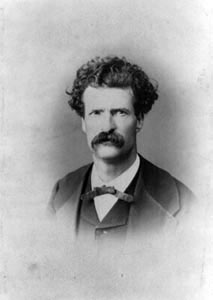
Mark Twain

photo01
BIOGRAPHY

On Nov. 30, 1835, the small town of Florida, Mo. witnessed the birth of its most famous son. Samuel Langhorne Clemens was welcomed into the world as the sixth child of John Marshall and Jane Lampton Clemens. Little did John and Jane know, their son Samuel would one day be known as Mark Twain – America’s most famous literary icon.

Approximately four years after his birth, in 1839, the Clemens family moved 35 miles east to the town of Hannibal. A growing port city that lay along the banks of the Mississippi, Hannibal was a frequent stop for steam boats arriving by both day and night from St. Louis and New Orleans.

Samuel’s father was a judge, and he built a two-story frame house at 206 Hill Street in 1844. As a youngster, Samuel was kept indoors because of poor health. However, by age nine, he seemed to recover from his ailments and joined the rest of the town’s children outside. He then attended a private school in Hannibal.

When Samuel was 12, his father died of pneumonia, and at 13, Samuel left school to become a printer’s apprentice. After two short years, he joined his brother Orion’s newspaper as a printer and editorial assistant. It was here that young Samuel found he enjoyed writing.

At 17, he left Hannibal behind for a printer’s job in St. Louis. While in St. Louis, Clemens became a river pilot’s apprentice. He became a licensed river pilot in 1858. Clemens’ pseudonym, Mark Twain, comes from his days as a river pilot. It is a river term which means two fathoms or 12-feet when the depth of water for a boat is being sounded. “Mark twain” means that is safe to navigate.

Because the river trade was brought to a stand still by the Civil War in 1861, Clemens began working as a newspaper reporter for several newspapers all over the United States. In 1870, Clemens married Olivia Langdon, and they had four children, one of whom died in infancy and two who died in their twenties. Their surviving child, Clara, lived to be 88, and had one daughter. Clara’s daughter died without having any children, so there are no direct descendants of Samuel Clemens living.

Twain began to gain fame when his story, “The Celebrated Jumping Frog of Calavaras County” appeared in the New York Saturday Press on November 18, 1865. Twain’s first book, “The Innocents Abroad,” was published in 1869, “The Adventures of Tom Sawyer” in 1876, and “The Adventures of Huckleberry Finn” in 1885. He wrote 28 books and numerous short stories, letters and sketches.

Mark Twain passed away on April 21, 1910, but has a following still today. His childhood home is open to the public as a museum in Hannibal, and Calavaras County in California holds the Calavaras County Fair and Jumping Frog Jubilee every third weekend in May. Walking tours are given in New York City of places Twain visited near his birthday every year.

Source:
Other web sources: